In case you haven’t noticed (wink), it’s lovely around here in the springtime. Part of that is innate. The landscape has great bones, from mountain peaks to muddy shorelines and everything in between. Part of it is cultivated: humans inspired by the natural glory of this place have made an art of collaborating with what exists to add their own bursts of form and color, planting and tending and nurturing and trimming to craft the looks they love.
You’ll see examples of this art form dotting the byways and countryside everywhere you go, from rolling meadows to inviting arbors, from swaths of flowering trees to a carefully nurtured burst of vines encircling a fence or trellis. We love our landscape and it loves us back.
Here are some places to check out where you can relish this relationship in its full glory. If you’re visiting, add one of these special spots to your itinerary for a heaping helping of grace and peace. If you’re a resident, consider this a study guide: gardeners through the ages have been guided by the hills and hollows, the waters and the stones, to create something original with the beauty that’s here, and you can do likewise in your own backyard, whether it’s big or small, flat or sloping, shady or sun-kissed, or all of the above.
Have a beautiful tour, and stay tuned till the end for our local garden tips.
Photo by Ali G. Rashidi.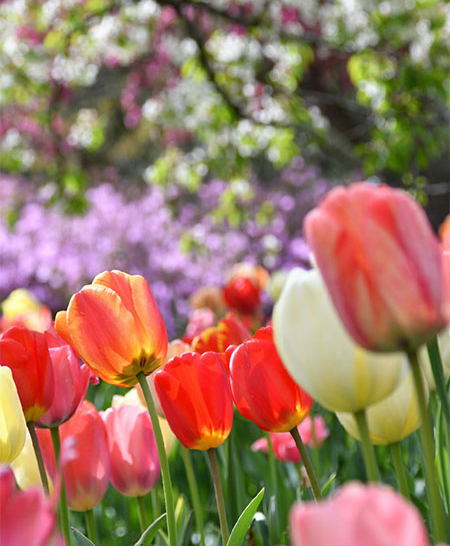
blithewood garden
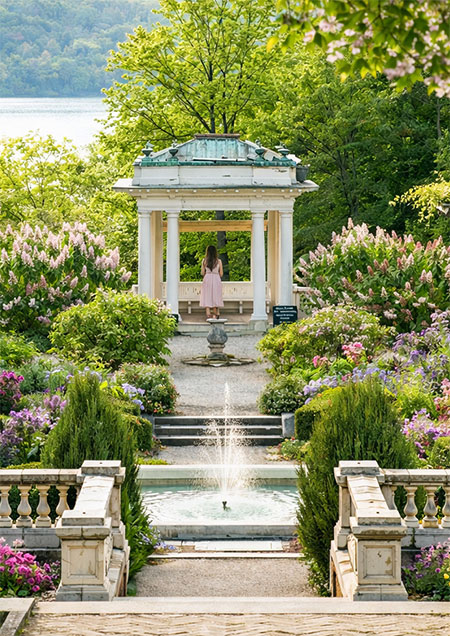
Blithewood Garden in Annandale is a formal Italianate walled garden set on a bluff that swoops dramatically toward the Hudson. Designed in 1903 by Francis Hoppin for a New York City real estate magnate and his wife, it occupies what AmericanAristocracy.com designates as “one of the most enviable positions along the Hudson.” Squint just a bit and you can conjure the specters of Gilded Age afternoons and sunsets.
The symmetry and strong lines framing views of the Hudson and Catskills were originally laid out in 1841 by noted landscape designer Andrew Jackson Downing, a Newburgh native and horticulturist, as well as a strong advocate for the importance of public green space. Sensibly, Hoppin kept much of Downing’s original plan intact.
Note the strong framing established by the geometry of the pathways and built elements. Consider planning out your own pathways, structures (a birdbath? a bench?), and fences before you plant.
Blithewood Manor was gifted to Bard College in the mid-20th century, and the grand manor now houses the college’s Levy Economics Institute. Restoration began in 2016, a joint project of Bard and the nonprofit Garden Conservancy. The garden is part of the Bard Arboretum; you can pick up a self-guided walking tour brochure at one of several on-campus visitors centers or download a printable version online. It's open to the public free of charge from sunrise till sunset every day.
30 Campus Road
Annandale-on-Hudson, NY 12504-5000
845-752-LEAF (5323) bard.edu/arboretum/about/blithewood
locust grove estate
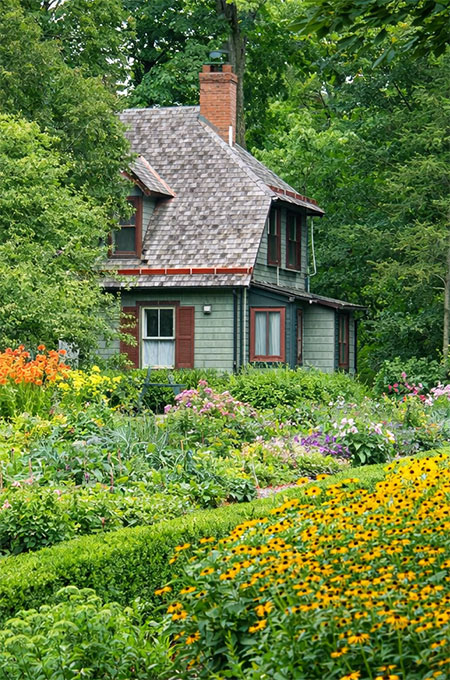
Locust Grove Estate in Poughkeepsie is famed for having been the home of Morse Code inventor Samuel Morse, who transitioned a so-so farmstead into a scenic wonder with a view framed by woodlands, orchards, and meadows. Its gardens were expanded and re-envisioned by the property’s next owners, William and Martha Young, who purchased the property in 1895. Their planted gardens—both the formal garden and the “cutting garden,” as well as the kitchen garden that fed the family—were Martha’s domain; they’ve been preserved and restored to capture her unique tastes.
The Youngs added a privacy barrier of trees and shrubs on three sides, leaving open the Hudson River viewshed, where Morse had painstakingly developed a “composed picture,” working, as Morse had done, in collaboration with existing features of the landscape he adored. (“I am almost afraid to tell you of its beauties and advantages,” Morse wrote to his brother of the property on the day the sale closed.)
Note the gentle blurring of the lines between garden, meadow, and woodland. Locust Grove’s gardens and landscapes present a master class in working the land with a light touch, adding features that spark joy while protecting Nature’s own creations. William and Martha’s daughter Annette Innis Young created the nonprofit foundation that maintains the house and grounds. The grounds are open every day from 10 am till 5 pm, April 1 through December 30; mansion tours are available Friday through Monday.
2683 South Road, Poughkeepsie, NY, 12601
845-454-4500
lgny.org
mountain top arboretum
Mountain Top Arboretum in Tannersville was founded by Peter and Bonnie Ahrens, whose summer place overlooked seven acres of scrubland in the Greene County Catskills.
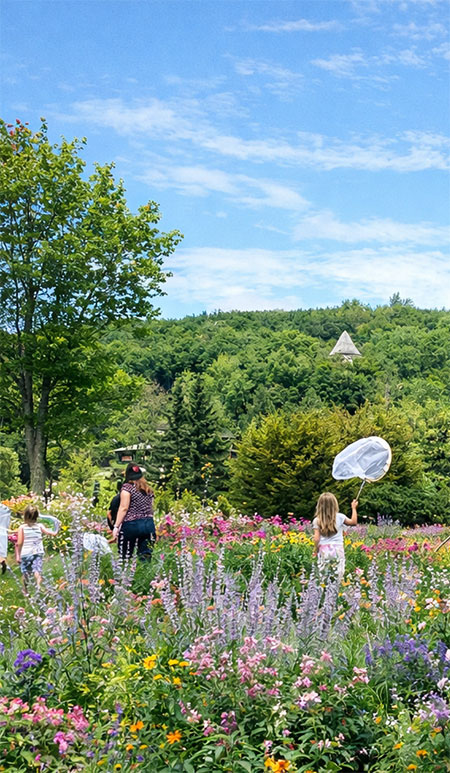
Peter Ahrens was a noted research doctor studying cholesterol and health, and when the couple decided to purchase their viewshed, they set about supplementing the land with topsoil and planting trees, wanting to study how various species—both native and exotic—would manage to survive a harsh mountaintop winter.
The results were interesting and lovely, and in 1977 they opened their seven acres as a public garden. Since then, more land has been added; the Arboretum is now 200 acres of forest, meadows, and wetlands and has become a land stewardship organization devoted to understanding the Catskills ecosystem and how best to help it flourish and thrive. The seven-acre West Meadow section, nestled amid mountaintops, is a wonder of the hardy grasses, shrubs, and flowers that are well adapted to thin soil and wind, with several crafted and planned gardens of native plants: a Rain Garden, a Bird Cove that offers a sheltering habitat for pollinators and feathered friends, a fragrant Spiral Labyrinth, and a section of exposed bedrock in which you can read 375 million years of natural history. Other sections have features like the Fairy Garden, an outdoor amphitheater, a historic pump house, and much, much more.
Note what grows where, what neighbors it, and what type of terrain it’s nestled in. The Arboretum, in contrast to other places on this list, is created by and for the plants themselves; you can find ideas here about what plants might be happy amid the most challenging conditions of your homestead. You’ll notice that Nature has an aesthetic sense all Her own. The Arboretum’s gardens and trails are open to the public from dawn till dusk every day of the year; Tuesday through Saturday from 9 till 4 you can visit the Education Center. There’s a $5 suggested donation for non-members.
4 Maude Adams Road, Tannersville, NY 12485
518-589-3903
mtarboretum.org
mohonk mountain house gardens
Mohonk Mountain House in New Paltz offers a different kind of cultivated splendor—one rooted in Victorian-era design and preserved with deep reverence for history.
Set within the storied mountaintop resort overlooking Lake Mohonk, the formal gardens unfold in a series of terraces, pergolas, and stone pathways framed by sweeping mountain views. Seasonal plantings—from tulips and peonies to roses and late-summer dahlias—are arranged with classic symmetry and romantic abundance, creating a vibrant contrast against the rugged Shawangunk Ridge backdrop.
Originally developed in the late 19th century, the gardens reflect the Mountain House’s long-standing commitment to stewardship and beauty. Access to the grounds requires either a day pass, a meal reservation, or an overnight stay at the resort, making a visit feel both intentional and immersive. It’s a garden experience layered with history, hospitality, and some of the most breathtaking vistas in the Hudson Valley
1000 Mountain Rest Road, New Paltz, NY 12561
855-883-3798
mohonk.com
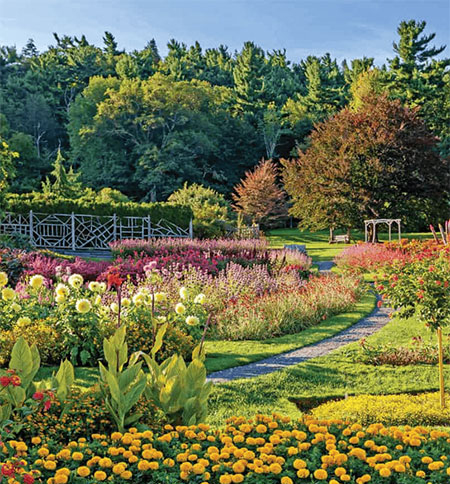
mohonk preserve’s weinstein butterfly garden
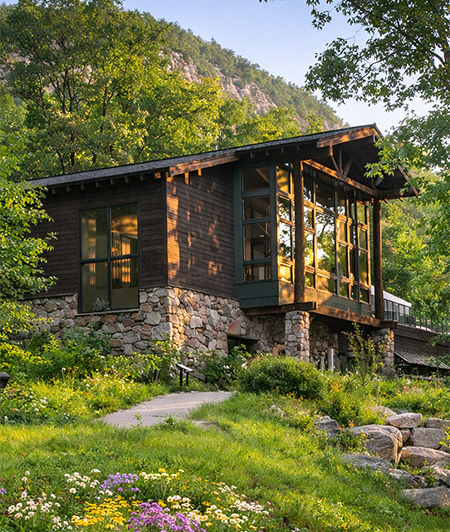
Mohonk Preserve’s Weinstein Butterfly Garden in Gardiner, located near the Visitor Center along the J & S Grafton Sensory Trail, is a lovely and colorful example of human/ecosystem collaboration. Plantings here are the ones that butterflies and other pollinators love, and you’ll find them flourishing most in late spring and summer when the flowers are in bloom.
This is where you can learn and be inspired by the native species that love to grow in the Shawangunks and nourish the pollinators that keep us all alive. The Sensory Trail is a level, 1/4-mile loop perfect for the youngest hikers or for anyone with just a little time to spare who wants a deeply refreshing taste of Nature at work. The adjacent LaVerne Thompson Nature Trail is a tad bit longer and more rolling; both include interpretive stops where you can learn all about the ecosystem you’re immersed in.
Note the names of your favorite butterfly-friendly plants and look for them at local nurseries and garden shops to draw some of the winged beauties to your own yard.
3197 State Route 44/55, Gardiner, NY 12525
845-255-0919
mohonkpreserve.org/visit/visitor-center
innisfree garden
Innisfree Garden in Millbrook was originally the private home of Walter and Marion Beck, an artist and a gardener, respectively, who moved to the property in the 1920s. Beginning in the late 1930s, they collaborated with landscape architect Lester Collins, who would then study and teach his craft at Harvard with a focus on gardens of East Asia.
Innisfree was his magnum opus; he worked the 185 acres for 55 years, opening the garden to the public in 1960 after the Becks had passed and ultimately writing Innisfree: An American Garden, which was published posthumously in 1994. His widow would continue the work until her own death in 2012. Innisfree was listed on the National Register of Historic Places in 2019. The gardens are a natural bowl centered around the lovely 40-acre Tyrrel Lake and its tributary streams. Walking the Lake Path draws the visitor through a series of natural rooms, smaller focal points for which Walter Beck coined the name “cup gardens.” The designs incorporate East Asian principles with Modernist and Romantic ideals, all of it working harmoniously with Nature to create a unique series of meditative moments.
Note the flow and the homage to the Japanese principle of wabi-sabi, the beauty of imperfection and transience. The creators of this garden knew that they could craft and change the landscape, while it would ultimately do the same to them and to whatever features they chose to craft. Innisfree is open to the public from 10-5 Wednesday through Sunday and on federal holidays from late April through mid-October and on weekends through mid-November. Advance tickets ($10 general, $5 for seniors and kids 5-15, free for members) are recommended, as parking fills up fast.
362 Tyrrel Road, Millbrook, NY 12545
845-677-8000
innisfreegarden.org
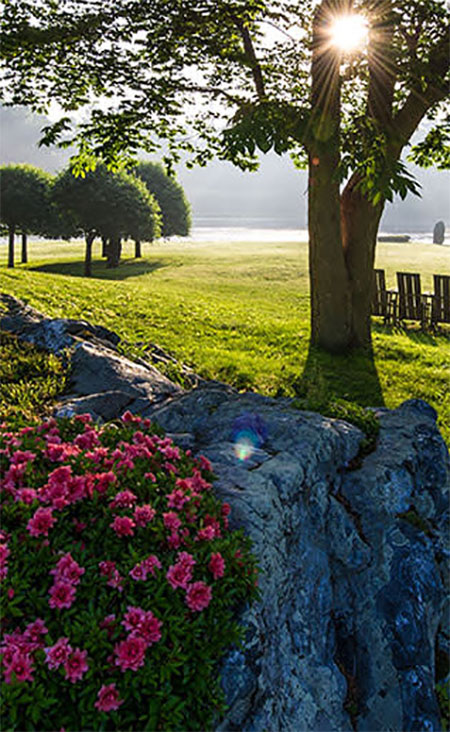
bring it home: draw inspiration from our grand local gardens
The grand gardens of the Hudson Valley and Catskills weren’t created overnight. They were shaped by observation, intention, and collaboration with the land itself. Whether you’re tending a hillside meadow or a modest village yard, the same principles apply. Here are six ways to borrow inspiration from these storied landscapes—and make it your own.
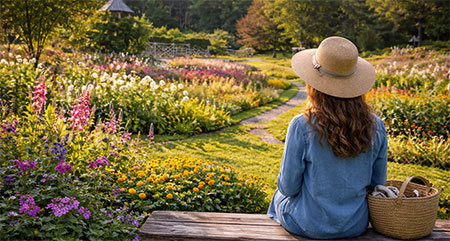
1. begin with observation
Before you plant a single thing, study your land. Notice where the sun lingers longest. Where frost settles. Where soil drains quickly or stays damp. Walk it at different times of day.
Even the most celebrated gardens began with understanding what already existed.
Make a simple sketch. Let the land guide your choices.
2. add structure before planting
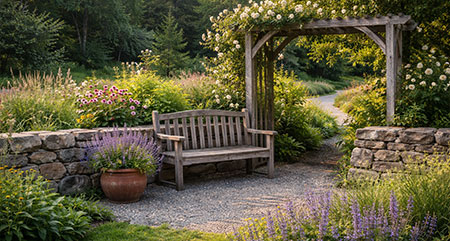
Great gardens are grounded in bones. Pathways, pergolas, stone walls, benches—these elements give shape and rhythm year-round, even before anything blooms. Consider:
• Pea gravel or paver walkways • A dry-laid stone border
• A focal-point bench • A birdbath or sculptural feature
3. blur the edges
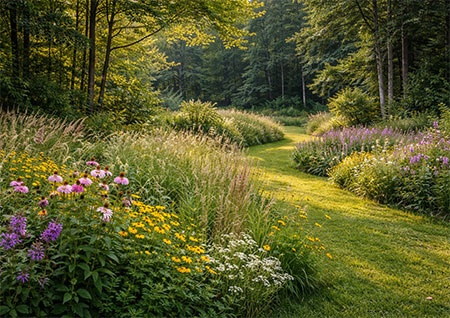
Notice how local gardens allow meadow to melt into woodland.
Instead of rigid borders, let your garden soften at the edges. Allow native grasses, ferns, or shrubs to transition naturally into surrounding woods or fields.
Nature rarely grows in straight lines.
4. plant with purpose
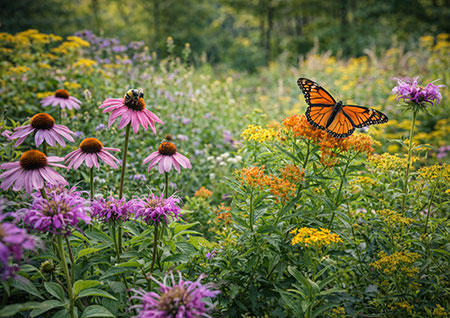
Mix native and adapted plants thoughtfully. Avoid invasives. Include species that nourish pollinators—milkweed, coneflower, bee balm, goldenrod.
The gardens you visited thrive because they participate in the ecosystem rather than fight it.
Your backyard can do the same.
5. design for a season-long story
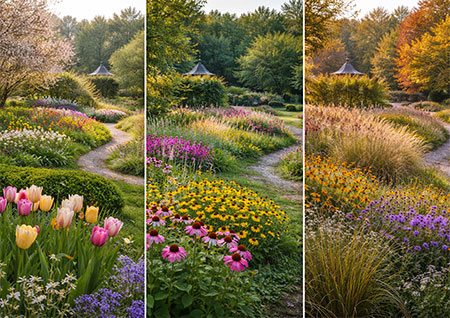
The most captivating gardens change as the months unfold. Plan for:
• Early spring bulbs
• Mid-summer perennials
• Late-season grasses and seed heads
Layer bloom times so something is always happening—from first thaw to autumn glow.
6. grow something you can eat
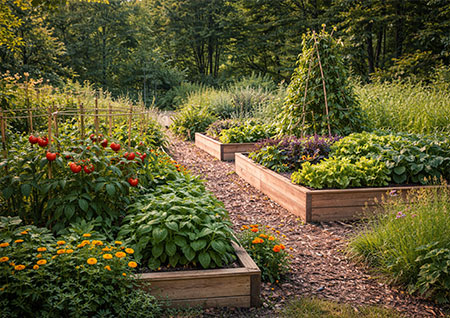
Kitchen gardens have long been part of Hudson Valley estates. Berry bushes make beautiful borders. Herbs soften pathways. Logs inoculated with mushroom spores tuck naturally into woodland edges. Edible can be ornamental. Practical can be beautiful.
The grand gardens we admire are not distant ideals—they are invitations. Each began as raw land shaped by thoughtful hands. Start small. Plant intentionally. Let your garden evolve with the seasons. The Hudson Valley has already given us the blueprint.